November 8th, 2018
Podcast: Play in new window | Download (Duration: 1:35:29 — 87.9MB)
Subscribe: | More
No More Denial, Bionic Mushrooms!, Whales From SPACE!, Piranha Barks, Frogs Legs Forever, Wasting Diversity?, Milky Way’s Black Hole, Speaking of Holes, Blind Big Bird, Llama Bodies, Sliver Of Truth, And Much More…
Want to listen to a particular story from the show? You can do that here. Just look for the time-code link in the description.
DISCLAIMER, DISCLAIMER, DISCLAIMER!!!
Not every moment that passes by us on the carousel of life seems important.
They all are,
they all could be championed to some degree or another,
each tic and every tock could be better engaged to accomplish great things.
But, for the most part they just seem to zip by unnoticed.
Then,
every once in a while,
we take on a moment together.
And when we do,
when we all take on a single moment with our collective focus
When we take action together.
We are more effective than any one of us can ever be alone.
I am of course speaking of science.
Though it may apply to other things as well.
Because the moment in which you can do is always now.
And that moment is here on…
This Week in Science,
Coming Up Next…
No More Denial
Well, at least for two years in the House… Democrats gained back the House of Representatives, and in doing so have taken back the House Committee of Science Space and Technology. Ranking member Eddie Bernice Johnson made a statement laying out priorities.
Bionic Mushrooms!
Scientists have engineered a symbiotic system out of photosynthetic cyanobacteria and mushrooms using 3D-printing.
Watching Whales from SPACE!
Our best chance at tracking and monitoring whales might actually be to use satellites. Yes, whales are THAT BIG.
Wanna find some piranha?
Take a listen! New technology will be able to find, track, and estimate population size of piranha just by listening. And I thought fish couldn’t talk!!
Support us on Patreon!
This Week in What Has Science Done for me Lately?!?
“Hey there, writing again over a year after my first entry about Hurricane Harvey.
Today I was sitting in my car, having just picked it up from being repaired after a parking lot fender bender, and was thinking how nice it was to have it back when the “What Has Science Done For Me Lately?” segment came on TWIS. I realized many of the reasons I liked having my own car back was due to science, because it’s a hybrid. Usually gasoline is a rare thought, I stop more at gas stations to grab something from the convenience store then I do to get gas. Even though the rental car was smaller then my hybrid, I was surprised how much I ended up paying attention to the amount of fuel in the tank. Also I found myself a little annoyed of what to me were the odd sounds in made in the parking garage at my apartment, as I’ve grown so accustomed to the near silence of my car running entirely off of battery power at low speeds. Additionally, my place of employment offers preferred parking for hybrid and electric cars, which means normally I get a space that is very close to the building. This week without my hybrid I had to search the far reaches of the parking lot for a spot, and more then once got drenched in the rain going to or from the further away parking.
So thank you Science, to all the chemists, material scientists, engineers, and many more, who make it possible for me to have a hybrid car that is I enjoy.
PS In the next year I plan I buying my own home, so unlike at my current apartment, I’ll have easy access to an electric outlet from where I park my car, which will allow me to get a plug-in hybrid or fully electric car when my current hybrid needs replacement.
–Jay Schneiderman”
Frogs Legs Forever
Using a pregnancy hormone, researchers have enabled the regrowth of frog’s limbs, and think they can make it work in humans, too.
This week in sea star wasting disease
The plot thickens, and it is all about the microbiome!!
Milky Way’s Black Hole
It exists!
Speaking of Holes
Astronomers reported discovering black hole mergers in multiple galaxies.
Elephant bird was blind as a bat
And by blind as a bat, I mean they had poor eyesight. Because they weren’t blind, just nocturnal. And also bats aren’t either…. oh nevermind……
Llama Bodies
Llama’s might help us fight the flu. Who knew?
Sliver Of Truth
It might be aliens, but that doesn’t mean it is.
If You love TWIS, please consider making a donation below.
Don’t forget to tell a friend about TWIS, and to check out our Patreon page!
Tags: Blair Bazdarich, calendar, Dr. Kiki, Dr. Kirsten Sanford, education, KDVS, Kirsten Sanford, new media, news, Patreon, podcast, radio, science, science news, science podcast, science policy, science radio, STEM, talk, technology, This Week in Science, TWIS
Posted in alternative energy, amphibians, animal behavior, animals, astronomy, astronomy, astrophysics, astrophysics, biology, biotechnology, birds, Black Holes, Blair's Animal Corner, Calendar, conservationism, cosmology, ecology, energy, engineering, exploration, fish, galaxies, genetics, infectious diseases, insects, KDVS, mammals, marine biology, medicine, microbiology, molecular biology, NASA, oceanography, physics, physiology, podcast, psychology, relativity, science, science and politics, Science Education, science history, Science Music, sexy scientists, space, space exploration, technology, therapies, whales, z-Broadcasts | No Comments »
October 25th, 2018
Podcast: Play in new window | Download (Duration: 2:06:11 — 116.0MB)
Subscribe: | More
Interview w/ Dr. Daniel Holz, Brainy Birds, Liquid Land, Extra-Fast Internet, Momma Chimp Knows, Better Beetle Babies, Moss Medicine, Stressful Stink, Do Lizards Dream?, And Much More…
Want to listen to a particular story from the show? You can do that here. Just look for the time-code link in the description.
DISCLAIMER, DISCLAIMER, DISCLAIMER!!!
Interview w/ Dr. Daniel Holz,
Professor at the University of Chicago, in the Enrico Fermi Institute, the Department of Physics, the Department of Astronomy and Astrophysics, and the Kavli Institute for Cosmological Physics. He studies gravitational waves, and is a member of LIGO, the Laser Interferometer Gravitational-Wave Observatory. Follow him on Twitter!
Support us on Patreon!
This Week in What Has Science Done for me Lately?!?
“Dr. Sanford,
First I want to say how much I enjoy TWIS. I listen to several science podcasts — Naked Scientists and Guardian Science from the UK, Quirks and Quarks from the CBC, Science Friday (of course) & Undiscovered, Science from the AAAS, Science Talk from Scientific American, plus a couple of 60-120 second science sound bites. TWIS is my favorite. I hope you will have more interviews, and I would like to suggest that you create a separate collection of the interviews on the site to make it easier for listeners to find them and listen to them over again.
Over the years of listening (I remember when you were a doctoral candidate and podcasting from UC Davis), I have learned a great deal about multiple scientific subjects. One that particularly concerns me is my health. I am 72 years old and am fortunate in that I have no serious health problems so far. I am doing everything I can to keep my health for as long as possible.
I am particularly concerned about Alzheimer’s Disease. My mother was dying from it when she was my age now, and she died at 75. Last January on TWIS I heard about a study that showed that Tumeric taken in food (not as a pill) may be effective in preventing Alzheimer’s and curing early stages of the disease. Since then I have been doing myself daily by the simple method of adding it to my food at meals, including putting it on my morning toast. I also do calisthenics, inspired by studies that show that this can help with brain health, and I take long walks (5 miles plus) several times a week on the steep hillside I live on, during which I listen to TWIS and other podcasts.
The only problem I have with the tumeric is it gets on my clothes and stains them yellow. Now if science could develop a savfe, eco-friendly stain remover that would get those stains out I would be happy.
All the best to you, Jason, & Blair, and keep up the great work you are doing educating the rest of us about the latest progress in science.
Sincerely,
Bert Latamore”
Brainy Birds
New Caledonian crows have done it again. Showed off their impressive avian intelligence by creating compound tools made of smaller components to solve a food-acquisition task. This ability arose late in human evolution, and is expressed in children around 5-years of age.
New clues about what killed the dinosaurs
Liquid land might have played a part after the meteor impact.
Extra-super-fast-ultra-broadband internet on the way…
Researchers have figured out how to untwist twisted light with a smaller device, making faster internet a near-term possibility.
Two parents are better than one
But mom often gets the short end of the stick…
Momma knows best
Mother chimps know which males they can trust, and which they should steer clear of. That’s a mother’s intuition!
Moss Medicine
Maybe moss will be better than weed for medical uses. A species of liverwort contains a compound similar to THC that binds to cannabinoid receptors, acts to reduce inflammation, and has less of a psychoactive effect.
Stressful Stink
People apparently release a compound called isoprene into the air when stressed, and it could be used as a metric to determine group stress level… and maybe movie ratings.
Do lizards dream?
Yes, but not quite the same as we do.
AHHHH! A STICK!
What’s brown, sticky, and terrifying? If you’re a bird, sticks are scarier than snakes, because their movement is just spooky…
If You love TWIS, please consider making a donation below.
Don’t forget to tell a friend about TWIS, and to check out our Patreon page!
Tags: Blair Bazdarich, calendar, Dr. Kiki, Dr. Kirsten Sanford, education, Interview, Justin Jackson, KDVS, Kirsten Sanford, new media, news, Patreon, podcast, radio, science, science news, science podcast, science policy, science radio, STEM, talk, technology, This Week in Science, TWIS
Posted in animal behavior, animals, arthropods, astrobiology, astronomy, astronomy, astrophysics, astrophysics, biology, biotechnology, birds, Black Holes, Blair's Animal Corner, Calendar, chemistry, cognitive psychology, cognitive science, cosmology, Dark matter, earthquakes, ecology, emergent behavior, engineering, geology, insects, KDVS, mammals, medicine, neuroscience, physicists, physics, podcast, psychobiology, quantum physics, recreational drugs, relativity, reptiles, science, Science Education, science history, Science Music, sexy scientists, sleep, space, space exploration, stars, technology, theoretical physics, therapies, z-Broadcasts | No Comments »
October 18th, 2018
Podcast: Play in new window | Download (Duration: 1:43:20 — 95.1MB)
Subscribe: | More
My Two Dads, Life Questions, Nervous Stem Cells, Goo For Growth, Blind As A Bat?, Tornado Hurricane, Nicotine Noodles, Dead Rats, Preserve Life Now, Snow Song, And Much More…
Want to listen to a particular story from the show? You can do that here. Just look for the time-code link in the description.
DISCLAIMER, DISCLAIMER, DISCLAIMER!!!
Regardless of how many people have stated it in the past…
Ignorance is not bliss.
Yes there are things you cannot un-hear
Things you cannot un-see
And yes the world is full of totally regrettable and completely forgettable information…
It may even be safe to say that on any given day
There are more events worth forgetting than remembering.
However…
By having a mind nimble enough to sift through the noisy informational wreckage of a sentient society
Separating the factual from the fictional,
the cement-able concepts from the dreadfully disposable…
Seeking out sources that are soundly scientific
And deep-sixing suspiciously un-skeptical concepts
Are not acts of ignorance…
But acts of reason and rational thought.
These are the actions of an advanced mind.
An advancing intellect.
And there is no more certain sign that you’ve got such a mindful intellect than the act of listening to
This Week In Science…
Coming up next!
My Two Dads
An effort to create embryos from stem cells taken from two male mice was unsuccessful, but teaches us much.
Life Questions
New physical evidence suggests claims of early life from rocks in Greenland might be faulty.
What makes stem cells so nervous?
The nervous system!!!
Goo For Growth
Salivary excretions from carrion beetles restructure the microbial community in decaying corpses, and support growth of beetle young.
Blind As A Bat?
Surprise! Bats have generally good vision, but cave-roosting and echo-location definitely led to tradeoffs in detecting UV light.
Support us on Patreon!
This Week in What Has Science Done for me Lately?!?
“This will be my second “”What has science done for me, lately? contribution.”
I was inspired by your trio of unanimous dishwasher machine adoration in a podcast earlier this year.
I am on the opposite end of the curve from you in that I grew up in a house with a dishwashing machine that I abhorred to such extent that I have not sought to use one as an adult. I wash my dishes by hand and, I feel, I’m extremely water and energy efficient.
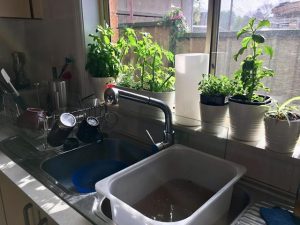
I have recently moved to the dry continent of Australia from the verdant Willamette Valley where one had but to lean out one’s door to collect water. Here, where water is scarce, I am abundantly grateful for my science dabblings. I use two buckets for dish washing: one full of water and soaking dishes, the other is rinse water. Easy, water efficient, and, here’s the sciencey part, perfect for watering the garden.
Why? Because I am a kitchen witch and my lotions and potions are all made from mostly food. I make my own cleaning materials, balms, and toothpastes from kitchen cupboard items, so everything in my world is biodegradable, plant and animal friendly, and safe to consume in case one has wee kidlings or pets. I take my two big buckets of food debris and soap water from the sink and use them to feed my herbs and vegetables with zero concern about chemicals that kill. I just made two batches of lye soap, and some jars of beeswax salve to gift for holidays. I even make my own enzyme counter cleaner from citrus peels. I’m so happy that science allows me to take happy, healthy, mostly edible components and, through judicious application of heat and chemical reactions, create safe products that sprang from and are happily returned to our precious Earth.
Thank you, Science!
–MiLady Carol”
Tornado troubles
They are moving East!
Hurricane humblers
Maybe off-shore wind turbines can lessen hurricane effects on land.
Nicotine Nursery
Nicotine leads to behavioral and genetic effects generations down the line.
If You Can’t Quit
There is a solution on the horizon – Enzymes nix nicotine addiction.
Dead Rats
Researchers looked at dead rat remains to understand the differences between country and city rats of long ago.
Preserve Life Now
It will take millions of years for mammals to recover diversity losses that are currently occuring thanks to human actions.
Snow Song
The snowy layer covering the Ross Ice shelf in Antarctica influences the internal vibrations of the shelf, which sound ominous when sped up for us to hear.
If You love TWIS, please consider making a donation below.
Don’t forget to tell a friend about TWIS, and to check out our Patreon page!
Tags: Dr. Kiki, Dr. Kirsten Sanford, education, Justin Jackson, Kirsten Sanford, new media, news, Patreon, podcast, radio, science, science news, science podcast, science policy, science radio, STEM, talk, technology, This Week in Science, TWIS
Posted in alternative energy, animal behavior, animals, archeology, astrobiology, bioethics, bioethics, biology, cell biology, cognitive psychology, cognitive science, conservationism, CRISPR, ecology, emergent behavior, end of the world, endangered animals, energy, engineering, evolution, genetics, geology, global warming, insects, KDVS, mammals, medicine, microbiology, molecular biology, neuroscience, nutrition, pharmacology, physiology, podcast, science, science and politics, Science Education, science history, Science Music, sexy scientists, stem cells, therapies, wind power, z-Broadcasts | No Comments »
October 11th, 2018
Podcast: Play in new window | Download (Duration: 1:44:31 — 96.2MB)
Subscribe: | More
The Bad News, Cassini’s Last Word, Galactic Archaeology, Smelly Fruit, Disturbing Mouse Calls, Neandertals Now & Then, Brains & Nerves & Things, New Vesuvius View, Fish Hook Ethics, Is Hubble Safe?, And Much More…
Want to listen to a particular story from the show? You can do that here. Just look for the time-code link in the description.
DISCLAIMER, DISCLAIMER, DISCLAIMER!!!
Imagine for a moment that something you think you know is wrong.
Not just any old tid-bit of information,
but something big…
Something fundamental to your understanding of other things that you know and believe.
You wake up one morning to breaking news headlines to learn that:
The sun is actually orbiting around the earth.
Now that would be a tremendous change to how you understand the solar system to operate.
And, if you are sufficiently skeptical,
slightly scientifically informed even…
You will likely doubt that this new information is true.
You may wonder why this is obviously incorrect idea is being propagated.
Yes, the experts and reporters are all exclaiming the evidence
of the recent research that has proven beyond a shadow of a doubt
that it is true…
The sun orbits the earth,
and it was just a poor understanding of the past that lead us to believe otherwise…
But you wouldn’t believe it.
How could you?
It makes no sense,
goes against all you know and learned.
Goes against how much the people you trusted knew more than you…
actually knew.
No.
You will not be swayed by any form of false evidence to the contrary.
The world may have gone mad,
but you alone will maintain the reasonable assumption
that the Earth is in orbit around the Sun and NOT the other way round.
And you are correct.
But if instead of this,
you had learned that global warming is not happening.
That climate science is a hoax.
That everyone you trusted as a source of information about the world was wrong…
You can no doubt imagine the reaction you might have to waking up one morning to…
This Week in Science
Coming Up next…
The Bad News
The IPCC issued a report this week recommending world governments take a drastic and unprecedented change of tack to meet a highly conservative global warming goal of only 1.5 degree Celsius in part through yearly reductions of more than 1 billion metric tons of CO2 emissions globally over the next decade, and ending all coal-power by 2050.
Cassini’s Last Word
It’s a tale of ice and dust, rings, and magnetic spin that will leave you wanting to know more.
Galactic archaeology
Digging up the past with telescopes.
It’s all in a smell
Fruit is fruit, so that it will smell. So thanks, rotten apples, and you’re welcome.
Happy home is a healthy home.
Mice work through troubles and make better parents when using soothing, less agressive tones. SO LOWER YOUR VOICE LINDA, I JUST WENT FOR A WALK, OK??
Support us on Patreon!
This Week in What Has Science Done for me Lately?!?
“Another one for what has science done for me lately.
Listening to podcasts this one included, has prepared me for a little sideline, advocating vaping as a stop smoking aid. I have read the science, helped by the podcasts I listen to (mostly this week in virology) where I learned to read scientific papers. This means I have been able to filter the science for the public, provide references and facts to them. I’ve done my part to help save potentially millions of lives, by switching smokers to vaping.
None of this would be possible without science.
Thanks for all the work you do.
Regards,
Richard
P.s
I switched to vaping years ago, and knew it was better than smoking, but science proves it to me (and others). How cool is that?!”
Ancient Neander health care
Community was key.
Modern Neander health care
Viruses were good for you and me.
Brain-sided Movements
Contrary to popular neuroscience evidence, researchers found that ipsilateral electrical activity in the brain could predict movement of a body limb. To date, animal and human research suggested movement instructions came from the opposite side of the body.
Painful Touch
A protein called Piezo2 was found to be responsible for sensitized pain responses after injury in two studies, suggesting that targeted therapies could be used to reduce pain.
New Vesuvius View
Would you rather suffocate or die instantly, burned alive? According to new research in PLoS One, volcanic victims may not have had a choice, and were likely killed by the intense heat from the pyroclastic flows.
Catch and release isn’t so harmless after all.
That hole left in a fish’s mouth spells bad news, in the end. But is it really worse than ending up on a dinner plate??
Is Hubble Safe?
For the time being, Hubble is in safe mode while engineers try to figure out what to do about a gyro.
If You love TWIS, please consider making a donation below.
Don’t forget to tell a friend about TWIS, and to check out our Patreon page!
Tags: Blair Bazdarich, Dr. Kiki, Dr. Kirsten Sanford, education, Justin Jackson, KDVS, Kirsten Sanford, new media, news, Patreon, podcast, radio, science, science news, science podcast, science policy, science radio, STEM, talk, technology, This Week in Science, TWIS
Posted in alternative energy, animal behavior, animals, anthropology, archeology, astronomy, astronomy, astrophysics, astrophysics, biology, Blair's Animal Corner, chemistry, cognitive science, conservationism, cosmology, ecology, emergent behavior, end of the world, endangered animals, energy conservation, evolution, exploration, fish, galaxies, global warming, insects, mammals, marine biology, molecular biology, neuroscience, physiology, planets, podcast, psychobiology, science, science and politics, Science Education, science history, Science Music, sexuality, sexy scientists, space, space exploration, spacecraft, stars, technology, z-Broadcasts | No Comments »
October 6th, 2018
Podcast: Play in new window | Download (Duration: 2:17:22 — 126.2MB)
Subscribe: | More
Interview w/ Dr. Susanne Brander from OSU, Nobel Prize Time!, Change Is Coming, Standard Model Challenge?, Neanderteeth, Bird PDA, Cats And Rats, Is That A Moon?, Goblin Planet, Very Old Dishes, And Much More…
Want to listen to a particular story from the show? You can do that here. Just look for the time-code link in the description.
DISCLAIMER, DISCLAIMER, DISCLAIMER!!!
Hmm…
My calendar says it is time for science.
So, we’ll be talking about science news,
with Kiki, Justin, and our guest Susanne.
You’ll notice, some of these voices are female.
In fact, the majority are.
And it should go without saying,
that female voices deserve to be heard.
So without further ado,
let’s talk about things that matter,
With people that matter.
Because everyone matters,
and we’re excited to talk about something
That is scientific, fun, enlightening, and true.
On This Week in Science!
Coming up next…
Interview with Dr. Susanne Brander
Dr. Brander is an ecotoxicologist working as an Assistant Professor in the Department of Environmental and Molecular Toxicology at Oregon State University in Corvallis, OR. She also holds an adjunct position in the Department of Biology and Marine Biology at the University of North Carolina. According to her lab website, “The Brander lab’s research encompasses the fields of toxicology, endocrinology, and ecology; integrating molecular approaches with measurements at the organism and population level. Our main focus is on the effects of stressors such as emerging pollutants, plastics, and changing climate on aquatic organisms, but our work spans the links between ecological and human health.”
Support us on Patreon!
This Week in What Has Science Done for me Lately?!?
” When I was serving in Iraq the vehicle I was driving was ambushed at a checkpoint manned by insurgents wearing Iraqi Police uniforms. Because of advances in material science and engineering the armor plating in the vehicle saved my life. Without those advances the bullets fired by the insurgents would have penetrated the drivers door and struck me.
Thank you sharing my story and hopefully more advances will be made in armor saving more soldiers lives. Please keep up the great work, TWIS is a great podcast and I learn a lot listening to it.
Thank you,
Chris ”
Nobel Prize Time!
Last week, we had the IgNobels, but now it is time for the Nobels. And, what a great line-up it is this year. “The Nobel Prize in Physics 2018 was awarded “for groundbreaking inventions in the field of laser physics” with one half to Arthur Ashkin “for the optical tweezers and their application to biological systems”, the other half jointly to Gérard Mourou and Donna Strickland “for their method of generating high-intensity, ultra-short optical pulses.” “The Royal Swedish Academy of Sciences has decided to award the Nobel Prize in Chemistry 2018 with one half to Frances H. Arnold ”for the directed evolution of enzymes” and the other half jointly to George P. Smith and Sir Gregory P. Winter ”for the phage display of peptides and antibodies”. And, the 2018 Nobel Prize in Physiology or Medicine was awarded jointly to James P. Allison and Tasuku Honjo for their discovery of cancer therapy by inhibition of negative immune regulation.
Change Is Coming
Get ready, America. Climate change is coming, and it’s not going to be fun for us.
Standard Model Challenge?
High energy particles detected by two Antarctic experiments suggest a particle that doesn’t match the Standard Model of physics.
Neanderteeth
Old teeth point to interesting habits.
How do you PDA?
Courtship displays in blue capped cordon-bleus were more elaborate if there was an audience. Can you say the same about you and your bae?
Cats don’t hunt rats
So what are they even good for???
Do you know what Algae sounds like??
Algal bubbles emit a particular sound. So particular, that measuring it could be an effective way to measure algae cover. Take that, Audrey II!
Is That A Moon?
As big as Neptune, this may be the first exomoon discovered.
Goblin Planet
A newly discovered dwarf planet hints at Planet 9.
Very Old Dishes
Residues on old pottery suggest ancient eating habits.
If You love TWIS, please consider making a donation below.
Don’t forget to tell a friend about TWIS, and to check out our Patreon page!
Tags: Blair Bazdarich, Dr. Kiki, Dr. Kirsten Sanford, education, Interview, Justin Jackson, KDVS, Kirsten Sanford, new media, news, Patreon, podcast, radio, science, science news, science podcast, science policy, science radio, STEM, talk, technology, This Week in Science, TWIS
Posted in amphibians, animal behavior, animals, anthropology, archeology, astronomy, astronomy, astrophysics, bioethics, biology, biotechnology, birds, Blair's Animal Corner, cell biology, chemistry, conservationism, ecology, emergent behavior, end of the world, engineering, evolution, exploration, extrasolar planets, fish, global warming, insects, KDVS, mammals, marine biology, medicine, microbiology, molecular biology, mollusks, NASA, nutrition, paleontology, physics, physiology, planets, podcast, science, science and politics, Science Education, science history, Science Music, sexuality, sexy scientists, space, space exploration, spacecraft, stars, technology, Women in Science, z-Broadcasts | No Comments »
September 28th, 2018
Podcast: Play in new window | Download (Duration: 1:59:28 — 109.9MB)
Subscribe: | More
Genie In The Lab, The Sixth Sense, Not So Brutal, Sickness Smells, Vegetarian Sharks, Mantis Fishers, Nasal Influence, Retroviral Addiction, Microbial Trash Cans, Synthetic Cellular Circuits, And Much More…
Want to listen to a particular story from the show? You can do that here. Just look for the time-code link in the description.
DISCLAIMER, DISCLAIMER, DISCLAIMER!!!
Chances are…
just that, things that happen by chance…
The unexpected meeting between two people
that otherwise would never have met if not for circumstances in which, unintentionally…
they do meet, they talk and…
Chances are that’s all they do.
Talk and for a few passing moments,
enjoy each other’s company and go their separate ways.
But there’s also a smaller chance that the conversation leaves a lasting impression on one of them.
And, though the probability becomes slimmer still.
There’s a chance that the conversation leaves a lasting impression on both of them.
So much so that they might decide that this conversation,
the one they just happened upon by chance,
should continue…
that it in fact,
should never end.
Science is a lot like that…
conversations started long ago,
often by chance,
that no one has tired of having…
Because it’s just too damn interesting to walk away from…
Just like This Week in Science,
Coming up next…
Genie In The Lab
A CRISPR-based gene drive to destroy reproductive ability in female mosquitoes was successful in the lab.
The Sixth Sense
Just like our other senses, there is a fast-acting sensory system in the gut that communicates with the brain by way of the vagus nerve.
Brutal people of the past
Weren’t so brutal.
Sniff sniff… Is your roommate sick??
We’ve known for some time that sickness carries a certain scent, but now just being near someone ill could give you the mark of illness. Is that why everyone left once I sat down at the table? I hope that’s it…
Mantises don’t only prey on the spineless…
They eat fish! Talk about yikes…
Vegetarian sharks
Say what? Bonnethead sharks eat lots of algae – changing the way we categorize these fish… Maybe…
Support us on Patreon!
This Week in What Has Science Done for me Lately?!?
“I know you and Blair had some concerns about the whole vaping thing a listener mentioned on the recent “”What Has Science Done for Me Lately””. But….
I got turned on to your podcast about six months ago by a friend and now TWIS, Science for the People, and Story Collider are highlights of my week. And, for 35 years I’ve loathed my addiction to nicotine. (Oh if I could go back and smack the 15 year old me up side the head…) I’ve spent the last two years especially trying everything out there with no luck. And then I heard the latest podcast. There was no way I was going to join the annoying hipsters with their idiotic vaping sticks – until I listened to you read that guy’s comments. So I went to my tobacconist and, all red-faced, told him I was thinking of trying vaping as a way to quit. He grinned and said “”Dude! That is how I quit a year ago! Let me set you up.”” And now I have massively reduced my nicotine intake. I can feel my body slowly weening itself off in a way I can handle. I can see the light at the end of the tunnel. And hell, even if it takes a while I am vaping – not sucking on non-filtered cigarillos, so that has to be a win. And in a week I saved $20. So I just sent that to you all. (And the store manager added TWIS to his podcast list by the way!)
Thanks for an amazing podcast. Thanks for filling my brain with amazing, beautiful, inspiring things every week. And thanks for turning me on to a tool that just make help me in other ways.
Cheers,
Todd Barnell”
The nose has it
Bacteria are linked to severity of colds.
Blame The Virus
An ancient retrovirus could be to blame for your drug addiction.
Mitochondrial Editing
Scientists are curing mice of disorders caused by mutations in their mitochondrial DNA with gene editing… will humans be next?
Microbial trash cans
Microbes have a way of taking out the metabolic trash.
Synthetic Cellular Circuits
Researchers developed proof of concept synthetic cellular components that fit together like a circuit to achieve various purposes inside cells.
Another Missing Link
A 127 million year old fossil was discovered in China that fills in another gap in the story of how dinosaurs became birds.
Biggest Bird Ever
Vorombe titan weighed in at over 1700 pounds.
Jellyfish and quinoa – dinner of the future!!
Quinoa has proven well suited for saline soils, more likely as sea level rise and local droughts linger on our radar.
If You love TWIS, please consider making a donation below.
Don’t forget to tell a friend about TWIS, and to check out our Patreon page!
Tags: Blair Bazdarich, Dr. Kiki, Dr. Kirsten Sanford, education, Justin Jackson, KDVS, Kirsten Sanford, new media, news, Patreon, podcast, radio, science, science news, science podcast, science policy, science radio, STEM, talk, technology, This Week in Science, TWIS
Posted in animal behavior, animals, anthropology, archeology, arthropods, bioethics, bioethics, biology, biotechnology, Blair's Animal Corner, cell biology, chemistry, conservationism, CRISPR, ecology, emergent behavior, endangered animals, evolution, exploration, fish, genetics, hayabusa, infectious diseases, insects, jelleyfish, KDVS, mammals, marine biology, medicine, microbiology, molecular biology, nutrition, pharmacology, physiology, podcast, science, science and politics, Science Education, science history, Science Music, sexy scientists, sharks, space, space exploration, spacecraft, technology, z-Broadcasts | No Comments »
September 20th, 2018
Podcast: Play in new window | Download (Duration: 2:10:56 — 120.3MB)
Subscribe: | More
Interview w/ Dr. Kathryn Matthews from Oceana, 2018 IgNobel Awards, Alzheimer’s Discovery, Touchy Sea Otters, Love Hate Relations, Early Birds, Cold Case Ivory, Star Trek Exoplanet, Sandalwood For Hair, Antidepressants And Antibacterials, Robotic Skins, And Much More…
Want to listen to a particular story from the show? You can do that here. Just look for the time-code link in the description.
DISCLAIMER, DISCLAIMER, DISCLAIMER!!!
The world is big and complicated and full of noise…
Not just the buzzing, humming, tire screeching, siren squealing, clickety-clack type noise…
But informational noise of all sorts.
The news you read today,
the conversations you had,
conversations you didn’t have but over heard in passing…
advertisements, road signs, the temperature of the air,
thoughts you only half formed,
How you look in a mirror,
the feeling of your feet when putting on shoes,
And how often it is you put on shoes compared to
how infrequently you reflect on how nice it feels to take them off…
And at the center of all the complicated informational noise going on around you…
is your brain.
Some of the noise is interesting,
some of it isn’t,
what’s a brain to do…
A few things to keep in mind at all times,
wherever you are and whatever your brain happens to be doing…
Anything can be interesting if you ask the right question…
Every question has an answer…
And every moment is an opportunity to ask the right question…
And with that in mind,
we bring you a few moments of people asking the right questions
on a variety of interesting subjects here on
This Week in Science,
Coming up next…
Interview with Dr. Kathryn Matthews
Dr. Kathryn Matthews is Deputy Chief Scientist at Oceana. She trained as a coral biogeochemist, and spent some time in the Arctic, but eventually transitioned through the years into science policy, working as a AAAS science and technology fellow for the US Congress, then for the Office of Marine Conservation in the U.S. State Department. She also worked with the the International Seafood Sustainability Foundation and with The Pew Charitable Trusts, where she ran a marine conservation and sustainable fisheries grantmaking program.
Support us on Patreon!
This Week in What Has Science Done for me Lately?!?
“Hey Dr. Kiki
Newer listener but I have caught up on the last year of shows! New patreon sponsor as well happy to be part of the TWIS family.
Science is so important to me, not just for my job as a hazardous waste tech/ transporter.
To the tests we use to identify harmful chemicals! So that we can take the proper precautions to protect ourselves, so I can go home to my three kids! One who has autism
Too some people this phrase is not a good thing, I started the same way but my wife being who she is recognized the symptoms!
To his pediatric doctor who specialized in developmental disabilities! To the specialized school that he went to at 2 1/2!!! His insatiable need for knowledge at 5 is astounding I.e. Periodic table, human physiology, all the countries and capitals. As with many who are on the spectrum he was lacking in social skills but speech therapy and his school have made leaps and bounds!
So science has altered mine and my family’s life
Thanks for all you do
–Ben Bignell”
2018 IgNobel Awards
As hard as it is to beieve another year has gone by… it is time once again for the IgNobel awards; awarded to science that makes people paugh, and then makes them think. The 2018 Ig Nobel Prizes were awarded at the 28th First Annual Ig Nobel Prize ceremony, on Thursday, September 13, 2018, at Harvard’s Sanders Theatre. The winners are…
Catching Alzheimer’s Early
Discovery could explain failed clinical trials for Alzheimer’s, and provide a solution.
Sea otters are touchy
These weasels can tell minute differences in texture by touch alone, with their paws or whiskers, helping to explain how they can hunt and search in murky waters.
Why do we like bees and hate wasps?
Once again, it all comes down to fear of the unknown.
Spring is coming earlier every year, it seems.
But that shift is not uniform among regions, and migration shifts are also off-kilter. This could be bad news for ecosystems.
CSI cold case Ivory
DNA helps to finger illegal ivory trade networks.
First TESS Images
The new NASA exoplanet mission, TESS, is up and running, and has returned its first images of the first sector of the southern sky it is to scan looking for planets transiting stars 30-300 light years from Earth.
Is Vulcan Real?
Astronomers think they have found a planet around 40 Eridani A, or Keid, which was the star around which the planet Vulcan orbited in Star Trek. The star is less than 17 light years from Earth, and about twice the size of Earth, although whether it is gaseous or rocky is as of yet unknown. TESS will be observing this star system beginning in November of this year.
Synthetic Sandalwood Saves Hair
Researchers found that synthetic sandalwood decreases rates of follicular cell death and increases the amount of growth factor released.
Antidepressants And Antibacterials
Prozac influences bacterial mutations and leads to antibiotic resistance through activation of efflux channels.
Robotic Skins
Yale roboticists have developed skins with embedded actuators that can turn just about anything into robots.
If You love TWIS, please consider making a donation below.
Don’t forget to tell a friend about TWIS, and to check out our Patreon page!
Tags: Blair Bazdarich, Dr. Kiki, Dr. Kirsten Sanford, education, Interview, Justin Jackson, KDVS, Kirsten Sanford, new media, news, Patreon, podcast, radio, science, science news, science podcast, science policy, science radio, STEM, talk, technology, This Week in Science, TWIS
Posted in animal behavior, animals, astrobiology, astronomy, astronomy, biology, biotechnology, birds, Blair's Animal Corner, chemistry, civilian space travel, cognitive science, conservationism, ecology, emergent behavior, end of the world, endangered animals, engineering, evolution, exploration, extrasolar planets, fish, genetics, global warming, insects, jelleyfish, KDVS, mammals, marine biology, medicine, microbiology, molecular biology, mollusks, NASA, neuroscience, oceanography, pharmacology, physics, physiology, planets, podcast, psychobiology, psychology, robots, science, science and politics, Science Education, science history, Science Music, sexy scientists, space, space exploration, spacecraft, stars, technology, therapies, Women in Science, world robot domination, z-Broadcasts | No Comments »
September 13th, 2018
Podcast: Play in new window | Download (Duration: 2:09:38 — 119.2MB)
Subscribe: | More
Interview w/ David Quammen, Sugar Maker, New Neurons Discovered, Human Egg Marks, Beer Before Farming!, Old Art, Shrimp Shields, Beetle Baby Branding, Shark Encounters, Plastic Dolphin Pee, AI For Radio, Finding Ordinary Matter, Hot Drops Move, Wolverine Me, And Much More!!!
Want to listen to a particular story from the show? You can do that here. Just look for the time-code link in the description.
DISCLAIMER, DISCLAIMER, DISCLAIMER!!!
If you don’t believe in evolution…
you are wrong.
Even if you haven’t replaced evolution with anything specific or supernatural…
By choosing to go against all observations across all domains of science…
you have chosen to be wrong.
If you do believe in evolution, congratulations!
Though you are likely wrong as well…
Not as wrong as someone who outright denies that life forms evolve…
But your understanding of what evolution means,
how it works,
how it’s taken place over the past 4 billion years
is likely not a model that fits well with how evolution has taken place on earth.
But fear not, you are not alone…
In fact you’ve probably got a better grasp than Lamarck, Darwin, and Huxley had.
Not that they were wrong,
you just happen to have been afforded an extra hundred years and more
of scientific insight and discovery to base your impression on…
And, tonight we will delve deeper into how evolution happens,
where we’ve been in search for answers and maybe where we are going…
All that and more ahead on
This Week in Science,
Coming up next!
Interview with David Quammen
David Quammen studied at both Yale and Oxford, and has spent his life writing amazing stories about nature, evoution, and man’s relationship with the natural world. He contributes to National Geographic magazine, and can claim to have been the sole author of one issue. He wrote The Song of the Dodo, Monster of God, The Reluctant Mr. Darwin, Spillover, Ebola, The Chimp and the River, a book about Yellowstone, and most recently The Tangled Tree, which we are thrilled and honored to speak to him about tonight.
Support us on Patreon!
This Week in What Has Science Done for me Lately?!?
“Science has allowed me to be super extra and give my rescue puppy a doggy dna test. I got to find out what all he is made of, which isn’t necessary, but is quite fun.
–April Robison”
Sugar Maker
How do sugars exist in space? What reactions created them? The Formose reaction creates sugars from formaldehyde and water, but things break down fairly quickly, so the reaction can’t explain clouds of sugars in space. Reseachers in Germany have shown that hydroxymethylene, a hyper-reactive carbene, doesn’t need water to create sugars when combined with formaldehyde. Could this be the missing molecule for interstellar building-blocks of life?
New Neurons Discovered
Turns out that there are more types of neurons in your inner ear than previously thought. According to a recent study using RNA sequencing to identify cell types in the ear, there are not just one, but three different Type I spiral ganglion neurons connecting to the hair cells, which appear to encode intensity information related to hearing.
Ancient humans, giant birds…
A story told of people lost to time.
Beer before farming!
Older cheese, older bread, and now, older beer.
Oh, and Human art just got a lot older too.
It pays to look at rocks sometimes.
Human shield? No, it’s all about the flying snail shield these days.
Amphipods carry pteropods to ward off predators. Whether the pteropods like it or not (which they do not).
Beetle parasites are all about customization
Beetles change their chemical and behavioral tactics to best tap into the resources nearby bees have to offer.
Sharks like it when you visit them!
It turns out the more you know about something, the more you care about it. So explains Blair’s entire career…
Plastic Dolphin Pee
Phthalates have been detected in the urine of wild dolphins. We don’t know what this means yet, just that we can see metabolites of plastics in dolphin pee.
AI For Radio
Using an AI algorithm to analyze data from the Breakthrough Listen data uncovered more fast radio bursts of unknown origin from dwarf galaxy FRB 121102.
Ordinary Matter Found!
Using a new method quantifying the gas illuminated by a quasar, researchers have corroborated other recent studies that find the “missing” baryonic matter in the universe. It’s in the gas in between things!
Hot Drops Move
Water dropped onto a hot pan has an internal mover according to a new study of this ‘Leidenfrost effect’. Apparently, fluid flow internal to the droplets influences the direction of movement of the drop over the pan’s surface as it evaporates.
We are all wolverine…
Blood makes skin move it!
If You love TWIS, please consider making a donation below.
Don’t forget to tell a friend about TWIS, and to check out our Patreon page!
Tags: Blair Bazdarich, Dr. Kiki, Dr. Kirsten Sanford, education, Interview, Justin Jackson, Kirsten Sanford, new media, news, Patreon, podcast, radio, science, science news, science podcast, science policy, science radio, STEM, talk, technology, This Week in Science, TWIS
Posted in agriculture, animal behavior, animals, anthropology, archeology, arthropods, artificial intelligence, astrobiology, astronomy, astronomy, astrophysics, astrophysics, biology, Blair's Animal Corner, cancer, cell biology, chemistry, cognitive psychology, cognitive science, computer science, conservationism, crustaceans, deep space, ecology, emergent behavior, evolution, galaxies, genetics, insects, KDVS, mammals, marine biology, microbiology, molecular biology, neuroscience, paleontology, physics, physiology, podcast, psychology, science, science and politics, Science Education, science history, Science Music, seti, seti, sexy scientists, sharks, space, stars, technology, z-Broadcasts | No Comments »